
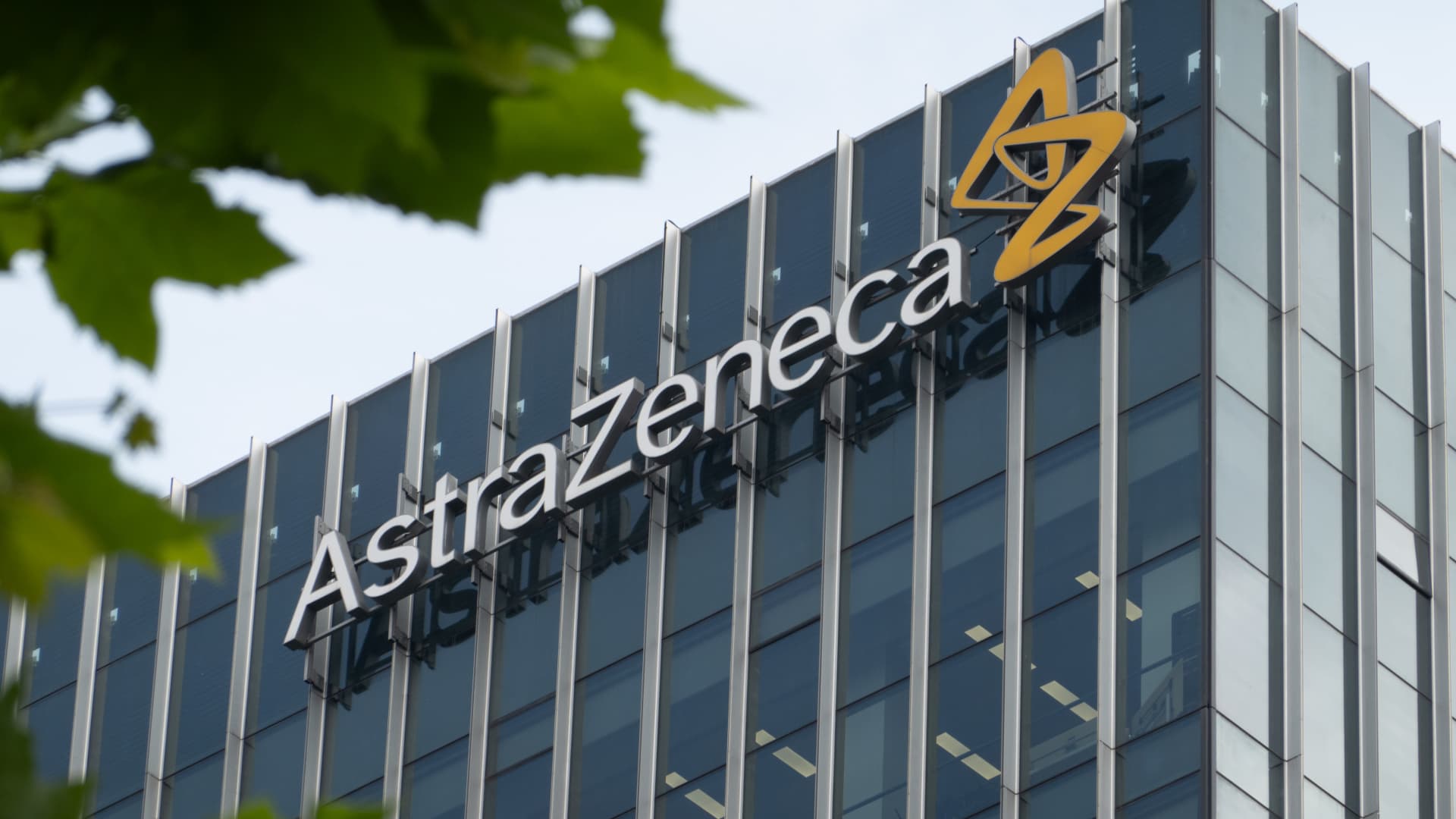

The office building of biopharmaceutical company AstraZeneca is viewed in Shanghai, China, May 23, 2024.
Photo only | Getty Images
A version of this article first appeared in CNBC's Healthy Returns newsletter, which brings the latest health news straight to your inbox. Subscribe here to receive future editions.
AstraZeneca said it is doubling its investment in its U.S. business, a move that comes just a week after Donald Trump's election victory.
AstraZeneca announced plans for $2 billion in new spending on research and development, bringing its total capital investment in the country to $3.5 billion by the end of 2026. The money will be used to strengthen the company's research and development as well as its manufacturing presence in the US
The British-Swedish pharmaceutical giant expects the new investment to create more than 1,000 jobs and “contribute to the growth of the US economy,” it said in a statement. The company said it currently has 17,800 U.S. employees at 17 locations in 12 states.
AstraZeneca said the expanded footprint will include a research and development center in Cambridge, Massachusetts, manufacturing facilities in Maryland and Texas, and additional sites in unspecified locations on the West and East coasts.
AstraZeneca described the investment as the first in a series of steps to reach its sales target of $80 billion by 2030 – a target set earlier this year.
The drugmaker is now one of the first major foreign companies to announce plans to invest in the US following Trump's election victory.
Several companies also announced major U.S. investments during Trump's first term. Trump often tried to take credit for these investments, even though it was difficult to prove a connection to his administration.
But AstraZeneca declined to say specifically whether there was a link between Trump winning a second term and his increased spending in the US
During a media call after the company's earnings release on Tuesday, AstraZeneca CEO Pascal Soriot said the investment was a “testament to our confidence in the U.S. economy – in the U.S. market over the next few years.”
During a separate event in New York City on Tuesday, Soriot also told reporters that the drugmaker had been thinking about the expanded investment “for a number of months.”
An earlier version of a Tuesday report from the Wall Street Journal suggested that the company was motivated by other factors: A source familiar with the matter told the medium that AstraZeneca's new investment was in response to the election results and a bet on one Second Trump administration would change certain elements of the Inflation Reduction Act (IRA) signed by President Joe Biden. The current version of the report no longer mentions the IRA.
This law, which took effect in 2022, contains provisions aimed at reducing prescription drug costs for seniors, such as by allowing Medicare to negotiate drug prices with manufacturers. AstraZeneca and other drugmakers have acknowledged that the IRA, particularly their Medicare pricing negotiations, is a headwind to their businesses. AstraZeneca's diabetes drug Farxiga was among the 10 Drugs targeted in the first round of negotiations, setting new prices for 2026.
But Soriot on Tuesday dismissed the idea that the company's decision was based on possible changes to the IRA. During the media event he joked that “sometimes I kind of dream” about the IRA being repealed, “but not to this extent.”
He also said some of the IRA's provisions were “good things,” such as a $2,000 cap on out-of-pocket payments for Medicare Part D enrollees starting in 2025.
Soriot said the company believes the IRA is “here to stay,” adding that the decision to increase its investment in the U.S. was “not so much” based on “specific policies for our industry.”
“It's more of a general belief that the economy will remain strong. And when you have a strong economy, hopefully that drives investment in innovation, of course in our industry, but also in many other industries,” he told reporters. “We want to use this innovation in the USA”
When asked about Trump's tariff policy, Soriot said it was “probably more relevant to other industries and certainly to other companies.”
Trump has threatened to impose a tariff of up to 60% on all goods imported into the US from China. But Soriot described its tariff policy toward AstraZeneca as “irrelevant” because the company does not source products from China for the United States
The products AstraZeneca markets in the U.S. are manufactured at multiple plants across the country, “and we're investing even more now,” he told reporters.
Feel free to send tips, suggestions, story ideas and data to Annika at annikakim.constantino@nbcuni.com.
The latest in health tech: General Catalyst's HATCo buys Summa Health for $485 million
An affiliate of venture capital firm General Catalyst has agreed to buy Summa Health, an integrated health system in Ohio, for $485 million, according to a news release Thursday.
The two organizations first announced the acquisition plans in January, but terms were not previously disclosed. Summa said Thursday that the deal, combined with current cash, will help eliminate $850 million in existing debt. The health system had about $859 million in debt as of Sept. 30, according to financial filings.
Summa operates in five counties in Northeast Ohio and supports more than 1,000 inpatient beds across its network of hospitals, community health centers and multidisciplinary group practices. General Catalyst laid the groundwork for the acquisition last year when it announced a new company called Health Assurance Transformation Company (HATCo), which it said has “decade-long” timelines.
Buying a hospital is an unprecedented move in the venture capital industry, but the fund's goal is not to reduce costs at Summa, HATCo executives told CNBC this winter. Instead, the company will work to create new revenue streams for Summa by introducing new technologies and care models.
“This is not a U-turn, this is not a distressed system,” said HATCo CEO Dr. Marc Harrison in an interview in January.
According to Thursday's press release, the company has committed $350 million in capital to Summa over the first five years to be used to invest in technology to ensure the health system has the resources it needs for routine operations needed. In addition, HATCo has committed an additional $200 million over the first seven years “for strategic and transformational investments.”
HATCo will evaluate technology solutions from a range of different companies, not just those in General Catalyst's portfolio. Harrison added that the technology companies HATCo is looking to use in Summa will be mature companies rather than early-stage startups.
As part of the acquisition, Summa will transition from a nonprofit to a for-profit organization. The health system said remaining funds after the deal closes will be used to support a new health-focused community foundation for the greater Akron area.
“We will be able to invest in and grow our team in ways we would not be able to achieve as an independent organization,” Summa executives said in the release. “And while Summa Health’s structure and model will change as we become part of HATCo, our priorities will not change and our providers, employees and leadership team will transition to the new entity.”
The deal is still subject to regulatory approval. Representatives for General Catalyst and Summa did not immediately respond to requests for comment.
Read more about why HATCo is taking over Summa here.
Feel free to send tips, suggestions, story ideas and data to Ashley at ashley.caroot@nbcuni.com.
Comments are closed.