

Photo: Jaromir Chalabala/Getty
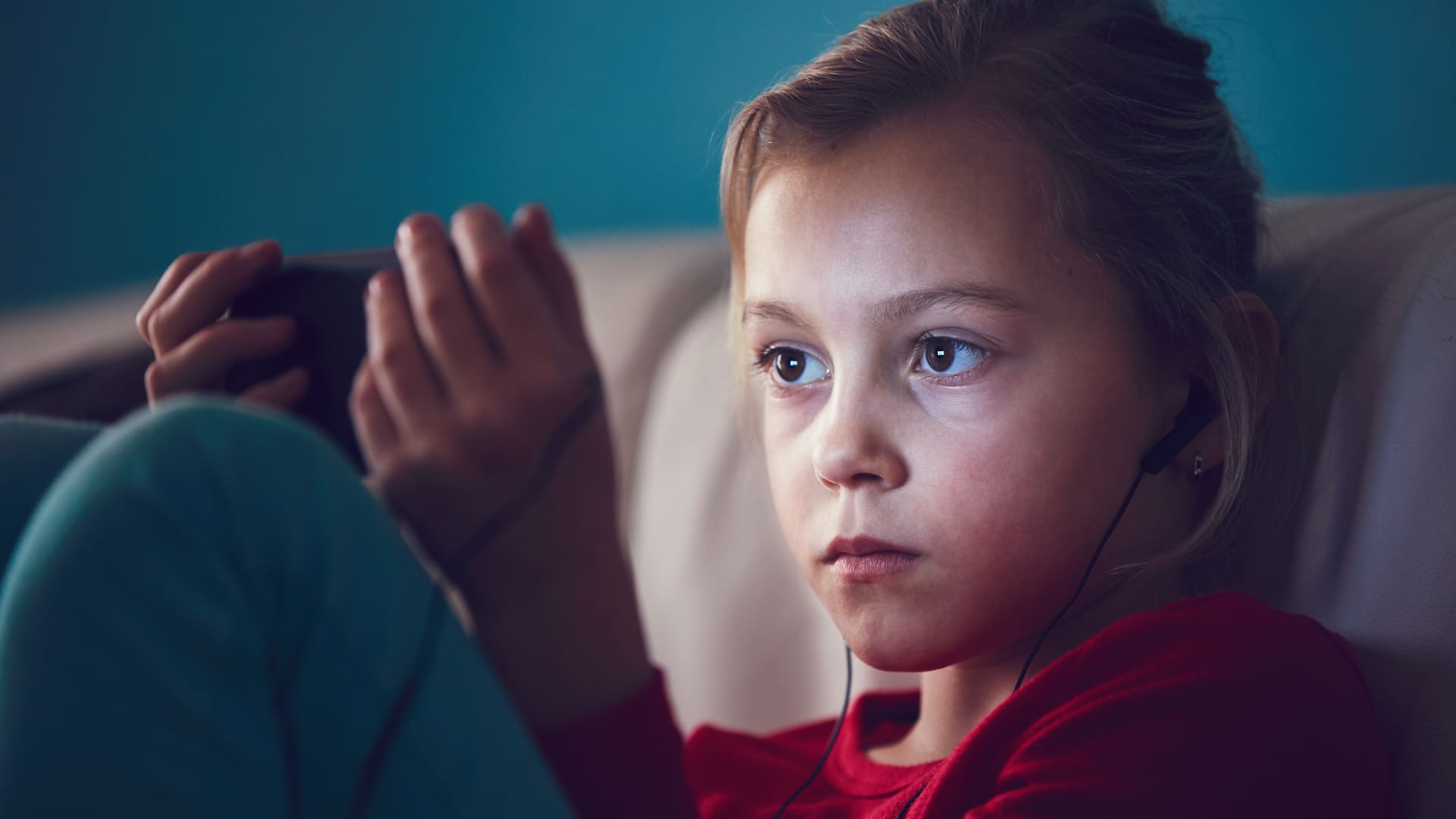
LONDON — With growing evidence linking smartphone use to mental health problems in children, a grassroots organization in the U.K. is supporting parents who don't give their children the devices.
Smartphone Free Childhood, founded in February by Daisy Greenwell and Clare Fernyhough, set up several local group chats for parents across the UK and grew to over 60,000 members within a few weeks, according to its website.
Interest in the movement is driven by concerns about the normalisation of children's use of smartphones. According to Ofcom, a government-approved regulator of communications services in the UK, 97% of children in the UK own a mobile phone by the age of 12.
In the US, 42% of children now owned a smartphone by the age of 10, and that number rose to 91% by the age of 14, according to a 2021 report by Common Sense, which surveyed 1,306 young people in the US between the ages of eight and 18.
In an increasingly online world, parents give their children smartphones for a variety of reasons, including entertainment, tracking their location and keeping in touch with them when they leave the house. But studies and experts point out that this opens the door to social media and potential mental health damage.
The goal of the SFC is to bring together parents who do not give their children smartphones to alleviate the peer pressure and isolation they may feel.
Due to its success, the company expanded internationally and established offices in the USA, Australia, the United Arab Emirates, Brazil, Canada, South Africa and numerous other countries.
Just days after the SFC campaign was launched, the British government – then led by the Conservative Party – issued new guidelines banning the use of smartphones in schools and during recess.
In some places in the USA – such as Los Angeles and the states of Florida and Indiana – mobile phones are banned in schools.
Other independent organizations are being formed around the world, including “Wait Until 8th” based in Austin, “Unplugged” in Canada, “No Es Momento” in Mexico and the “Heads Up Alliance” in Australia.
However, some academics and scientists remain unconvinced that there is a link between smartphones and poor mental health. Psychology professor Christopher Ferguson told NBC News earlier this year that society tends to react negatively to new technologies and their potential dangers, from televisions to video games and, more recently, AI.
Increased psychological problems?
According to a study published last year by Sapien Labs, the earlier young people acquired a smartphone, the worse their mental health deteriorated.
The study used data from 27,969 18- to 24-year-olds collected between January and April 2023 in 41 countries, including North America, Europe, Latin America, Oceania, South Asia and Africa.
About 74 percent of female respondents who received their first smartphone at age six reported feeling anxious or faced problems, according to the study. However, this proportion dropped to 61 percent among those who received their first smartphone at age 10 and 52 percent among those who received their first smartphone at age 15.
Among male respondents, the percentage feeling depressed or distressed decreased from 42% among those who got their first smartphone at age six to 36% among those who got their first smartphone at age 18.
Young people who purchased their first smartphone at an older age reported better psychological well-being, including fewer problems with suicidal thoughts and feelings of aggression, as well as fewer problems with detachment from reality.
These findings are mobilizing parents to take action, says Zach Rausch, a scholar at New York University's Stern School of Business and lead researcher for Jonathon Haidt's New York Times bestseller “The Anxious Generation.”

“The mass migration to a phone-based childhood has really hurt young people,” Rausch said in an interview with CNBC Make It.
“The research has gotten stronger and the evidence of harm has gotten stronger every year,” he added. “The lid has been taken off and parents are seeing other parents talking about it. So we're seeing a wave of parents coming together.”
The combination of smartphones and social media is particularly deadly for young people, says Rausch.
The UK Millennium Cohort Study, which follows the lives of around 19,000 young people born in the UK between 2000 and 2002, found a high correlation between social media use and depressive symptoms, including low self-esteem, online harassment and negative body image.
“When smartphones and social media really came together, a whole new way of interacting emerged,” Rausch said.
“So now you have social media in your pocket on your smartphone that is designed to maximize the time you spend on your phone… it's built in a way that is addictive and tries to keep you hooked.”
In recent years, Metathe parent company of social media platforms Instagram and Facebook, has come under criticism from lawmakers and parents for exposing children and teens to harmful content on its platforms, including multiple allegations of child sexual exploitation.
In turn, Meta CEO Mark Zuckerberg urged lawmakers to enact more policies and regulations to combat harmful online content. Amid mounting pressure, the tech giant announced in January 2024 that it would limit the type of content that teen users of Instagram and Facebook can see, including self-harm, eating disorders and nudity.
Some technology companies are trying to create kid-friendly smartphone and social media experiences. Google introduced YouTube Kids in 2015, a separate YouTube-like app with kid-friendly content and parental controls.
iPhone manufacturer Apple recently launched a new website promoting the Apple Watch for kids who are too young for smartphones. The device will be controlled via parents' iPhones so they can stay in touch with their children.
Comments are closed.