

As consumers become more selective about the type and location of their vacations, cruise lines are competing for Americans' travel budgets. Royal Caribbean believes that customer loyalty is ensured by shorter journeys and a fuller range of activities and exclusive offers.
“I think we have an experience-led mindset,” Royal Caribbean CEO Jason Liberty told CNBC's “Squawk on the Street” this week. “Over half of our guests are actually millennials or younger, and when you survey those guests, about 42% of them say they're actually planning shorter vacation experiences in the next 12 months.”
On board Royal's Utopia of the Seas, the world's second-largest ship with a maximum capacity of nearly 5,800 passengers, customers can expect 13 pools, 21 restaurants, two casinos and more. This is the second cruise ship Royal Caribbean has launched in six months. Liberty says the insatiable appetite for post-pandemic cruising has not waned.
“We do not see any withdrawal of consumers, either in planning their holiday experiences for a longer period of time… [or] then they go on the ships and continue to spend money,” Liberty said. “There is no area on the ship where we have seen a change in their spending behavior.”
To grow its business and increase its appeal, Royal Caribbean is looking for ways to better compete with other vacation types chosen by customers, such as skiing, casinos or theme parks.
“When we look at what our guests do when they're not with us, they go to Orlando, they go to Vegas, they go to all-inclusive resorts,” Liberty said. “We try to make sure that our experience, whether on the ship or on our private islands, can compete with a vacation on land.”
Jamie Katz, travel and leisure analyst at Morningstar, believes Liberty's strategy to bring Disney theme park travelers on board is working.
“The American traveler doesn't always have time for a six- to eight-day cruise due to work schedules and children's school commitments,” Katz said. “A three-day cruise offers customers more options.”
Expansion plans
One of the advantages of bringing a new ship to market is that you can charge more.
“There are really significant price premiums. Historically, the price of a new ship is 20 percent higher than existing ships across the industry,” said Patrick Scholes, travel and leisure analyst at Truist Securities.
Scholes said Royal Caribbean's Utopia price increase could be even higher.
Liberty expects higher prices to continue into the second half of the year, citing the “value gap” between cruises and land-based vacations.
rival carnivalhas also increased prices due to strong demand.
“We're not seeing any signs of a decline in consumption, if anything we're seeing an acceleration,” CEO Josh Weinstein told CNBC after the company released its latest earnings report in mid-June.

Analysts point out that cruises are one of the few areas within the travel and hospitality industry where prices continue to rise sharply. Last week Delta Airlines showed lower prices compared to the previous year. HSBC analysts expect airfares to remain unchanged or decrease in 2024 compared to 2023.
Several analysts and investors will board the Utopia this week to better understand what sets the cruise ship apart from the competition.
One interesting area will be the impact of cutting-edge technologies: According to Liberty, artificial intelligence is helping Utopia reduce food waste by 30 to 40 percent. The company also uses AI for dynamic pricing and intelligent management of customer data.
Apart from Utopia, not many ships from the cruise giants come into service.
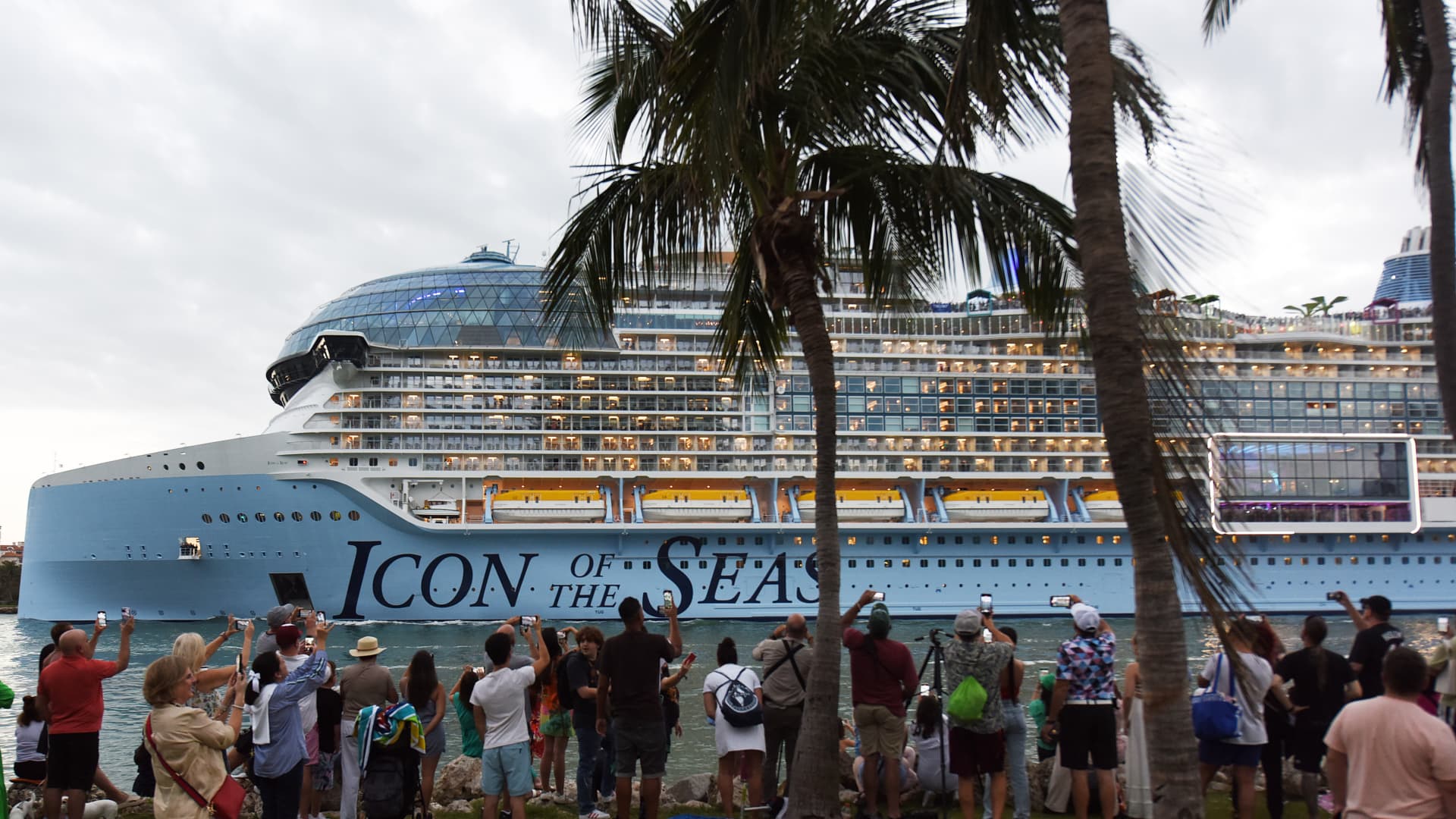
Royal Caribbean currently has the strongest order backlog in the industry. The company's Icon of the Seas, the world's largest cruise ship with a capacity of 7,600 passengers, caused a stir earlier this year.
In Royal Caribbean's recent earnings call, executives said bookings for Icon remain strong through 2025.
“We are in a two- to three-year phase where only a minimal number of vessels are being brought into service. Normally the industry increases its supply by 5 to 7 percent each year,” Scholes said.
But building a huge cruise ship requires a lot of work. Wall Street analysts estimate that it takes three to five years for a ship to be ordered and delivered.
Norwegian Cruise Line is working to launch eight new ships over the next six years.
Viking cruiseswhose share price was significantly higher than its purchase price at the beginning of the year, is bringing four new ocean-going cruise ships onto the market over the next three years, not including its river ships.
Correction: This story has been updated to reflect the correct number of new ocean-going cruise ships Viking is bringing on board.
Comments are closed.