
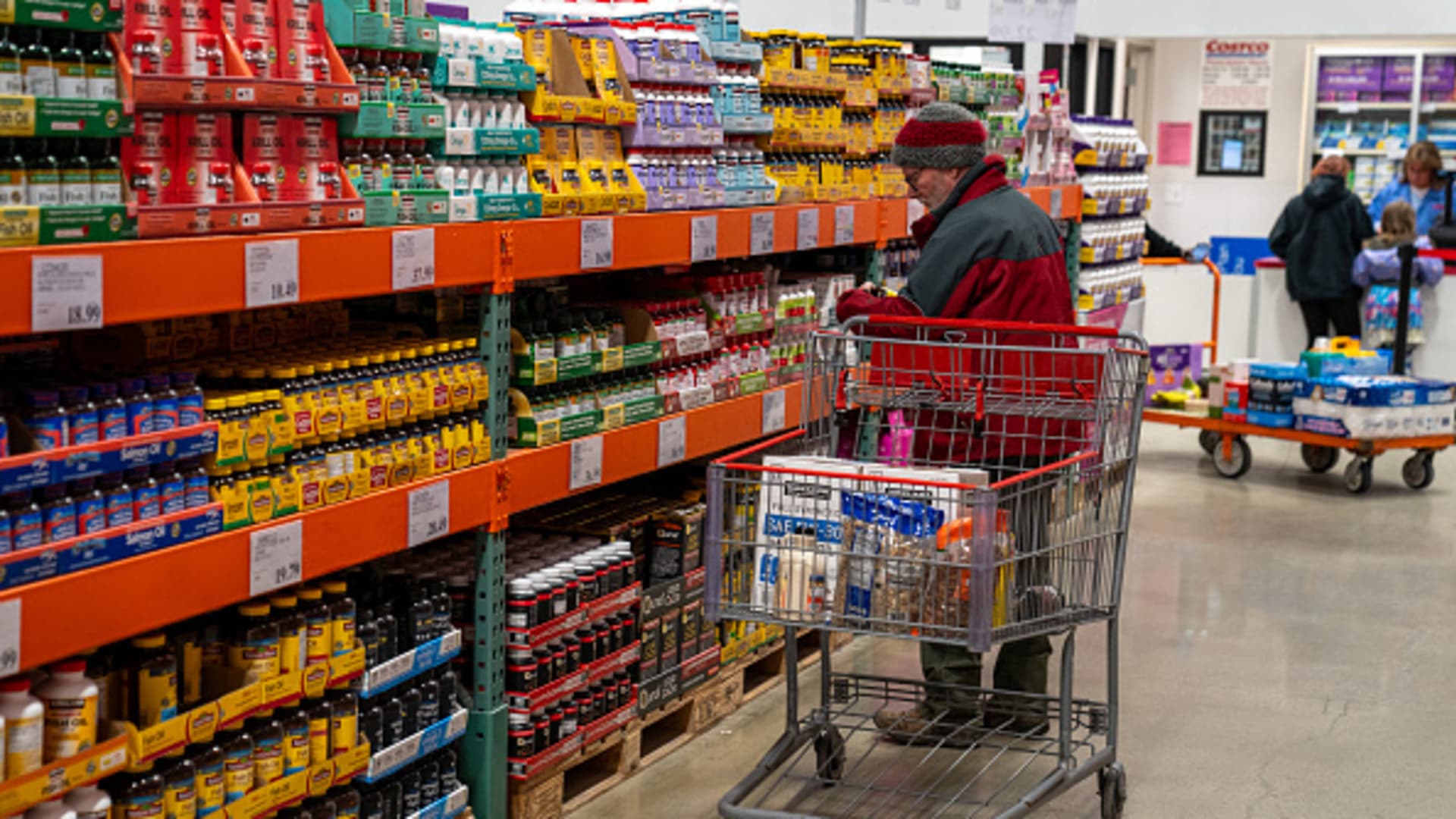

A man checks the label of a vitamin jar at a Costco wholesale store in Colchester, Vermont on April 3, 2024.
Robert Nickelsberg |
Small business confidence fell to its lowest level in more than 11 years in March as owners feared inflation remained a significant problem.
While other data point to declining inflation, the National Federation of Independent Business reported a reading of 88.5 in its survey on Tuesday, down nearly one percentage point from February and the lowest reading since December 2012.
A quarter of all respondents said that rising costs were the biggest problem.
“Small business optimism has reached its lowest level since 2012 as owners continue to grapple with numerous economic headwinds,” said Bill Dunkelberg, chief economist at the NFIB. ”Inflation was again reported as the top business problem on Main Street and labor market conditions have eased only slightly.”
A quarter of all respondents cited inflation, and in particular higher input and labor costs, as their most pressing problem. According to seasonally adjusted data, a net 28 percent said they would increase average selling prices for the month and 33 percent planned further price increases.
As part of those rising costs, a net 38% reported increasing wages, up 3 percentage points from February, the lowest since May 2021. The Labor Department reported Friday that average hourly wages rose 0.3% in March and 4.1% from a year earlier.
The survey is complemented by other indicators that show that inflation, while not eliminated, is at least declining.
A U.S. Commerce Department measure of personal consumption spending showed an annual inflation rate of 2.5 percent in February. The measure used by the Federal Reserve as its main inflation gauge showed an inflation rate of 2.8 percent when excluding food and energy, a figure preferred by policymakers as a better indicator of longer-term trends.
The consumer price index, a more closely watched measure, will be released on Wednesday and is expected to show inflation at 3.4% and core inflation at 3.7%. Fed policymakers are targeting an annual inflation rate of 2%.
Inflation expectations have been relatively well anchored in recent months. A New York Fed survey on Monday showed respondents in March expecting inflation to reach 3% next year, unchanged from February. The three-year forecast rose slightly, but the five-year forecast fell.
However, the survey showed a big jump in expectations for rent increases — up 8.7 percent next year, up 2.6 percentage points from February. Falling housing inflation is at the heart of the Fed's thesis that inflation will continue to move toward the central bank's 2 percent target, allowing for interest rate cuts later this year.
Fed survey respondents also said they expect significant price increases for most other major components. They expect gasoline prices to rise 4.5 percent and food prices to rise 5.1 percent next year, both of which are 0.2 percentage points higher than the February survey.
Comments are closed.