

The Commodity Futures Trading Commission headquarters in Washington, DC
Ting Shen | Bloomberg | Getty Images
Contracts marketplace KalshiEx has in recent days listed more than two dozen new options for the exchange's customers to bet on political outcomes, including the presidential race, the popular vote and the election results of that race, as well as individual Senate contests.
The new contracts were added to Kalshi's platform within days of a favorable federal appeals court ruling for the company on October 2. The ruling lifted an injunction that had blocked Kalshi from offering contracts that would give political parties control of each chamber of Congress after November elections.
A day later, Kalshi offered his customers a contract that would allow them to bet on the winner of the presidential election and potentially protect against any losses a customer might experience.
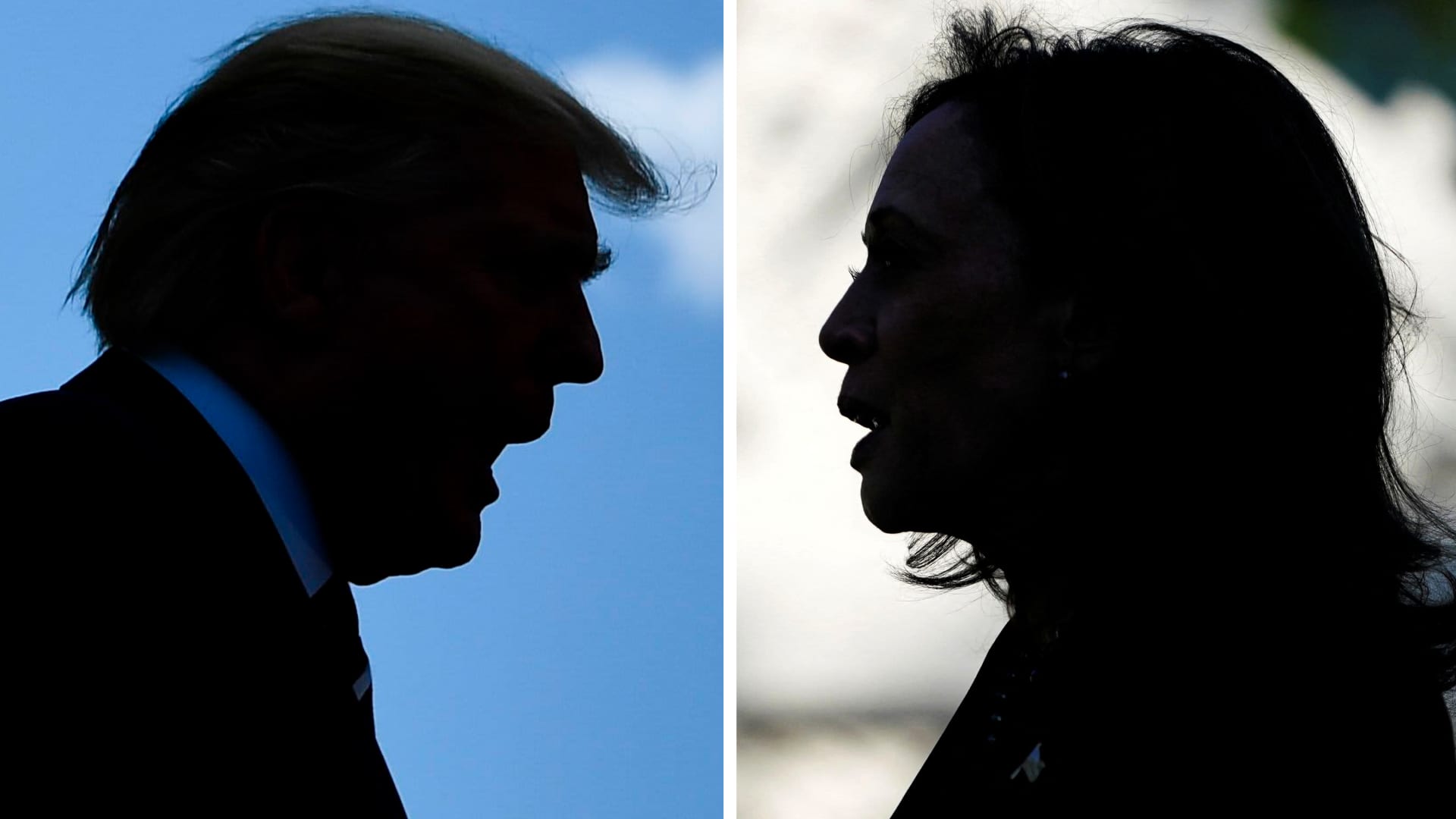
As of Wednesday, more than $3 million had been bet on political contracts on Kalshi's website, the lion's share of which was on contracts on whether Vice President Kamala Harris or former President Donald Trump would win the presidential election.
Other contracts available to bet on Wednesday included the results of individual Senate races, which state would be the tipping point in the presidential election, which presidential candidates would win individual swing states and what the margin would be in the race for the White House.
“It was great, there was huge demand,” Kalshi CEO Tarek Mansour said in an interview about the reaction to the exchange’s new political contract options.
Adding these options “was always the plan,” Mansour said, as the company fought a ban on these types of contracts issued by the Commodity Futures Trading Commission.
For Mansour, political outcome betting contracts represent a way for investors to hedge against the broader financial impact of one political outcome over another – rather than a means to influence the election itself.
“Each of these markets presents different risks,” he said. For example, if a president imposes tariffs, it could impact a customer's financial situation.
He said Kalshi's political outcome contracts were a more direct way to hedge such risks than the “bundles” of deals offered by investment banks to provide clients with protection against the election of a particular presidential candidate.
“We have a healthy mix of customers looking to hedge financial risks and speculators,” he said.
“Everything Kalshi does is subject to the law and regulated,” Mansour said, noting that the exchange must maintain records of its customers that are available to the federal government.
“We believe the law is on our side,” he said.
The CFTC disagrees.
Kalshi “went full throttle on election betting,” the CFTC said in a filing Tuesday with the U.S. Court of Appeals for the District of Columbia Circuit.
Even more political races may soon become available for betting with Kalshi contracts, the CFTC said, citing contract terms posted on the exchange's website. These include the 435 individual elections in the House of Representatives and other gubernatorial elections at the state level.
“Some of these blatantly contradict Kalshi's own arguments at the Court's recent hearing – that his contracts were not gambling because they were based on economically significant events,” the CFTC said in its filing.
“This does not apply to a contract that bets on whether a particular state will have the largest lead in the popular vote, or a contract on the winner of the popular vote, to name just two.”
The CFTC's filing supported an earlier request by the regulator that the appeals court expedite the agency's appeal of a lower court ruling that allowed Kalshi to take bets on the outcome of political races.
A CFTC spokesperson declined to comment to CNBC on the case. However, the commission argues that Kalshi's contracts could raise doubts about the integrity of the elections.
A federal district court judge in Washington, D.C., ruled last month that the CFTC's ban on Kalshi's congressional contracts was invalid because the regulator had wrongly determined that the contracts involved gambling or betting.
The appeals court initially blocked the judge's ruling from taking effect, which resulted in Kalshi being unable to offer political contracts.
But in last week's decision, a three-judge panel of the appeals court overturned the original ban, saying the CFTC had “failed to demonstrate at this time that irreparable harm would be caused to it or the public” if the contracts were offered would while the agency continued its appeal of the judge's decision.
Appeals Court Judge Patricia Millett noted in the ruling that “the question of the merits” of the CFTC's appeal is “narrow and difficult,” giving the regulator reason to hope that its ban on political contracts will be reinstated at some point becomes.
Read more about CNBC's politics coverage
Another important issue for Kalshi and the CFTC is the timing of any legal proceedings.
The CFTC called for expedited briefing on Tuesday, saying: “The public has an unusual interest in a quick resolution of the facts in this case.”
That's because “the court's decision has implications for the regulatory landscape for event contracts, the role a federal agency will play in overseeing election markets, and indeed issues of election integrity and perceptions of election integrity,” the regulator said in the filing .
Mansour, the CEO of Kalshi, said there was “no evidence” that political contracts “endanger election integrity.”
Mansour said any attempt by a client to influence the market's effective prediction of a particular outcome by betting on a particular candidate would cost a lot of money.
And even if it worked in the short term, other customers would bet against that outcome once they saw the market misjudge the likelihood of that election outcome, he said.
Comments are closed.