

As the 2024 US election approaches the home stretch, crypto companies are opening their wallets to try to influence the outcome.
Nearly half of all corporate money flowing into the election came from the crypto industry, according to a report by nonprofit watchdog group Public Citizen. The total of about $119 million was raised by a mix of donors, including Coinbase and Ripple accounted for more than 80% of donations.
Most of the money goes to super PACs supporting pro-crypto candidates running for office this year. The industry has faced increased scrutiny during the Biden administration, and Coinbase and Ripple are two of the biggest players embroiled in litigation with the Securities and Exchange Commission.
Donald Trump, the Republican candidate, has tried to exploit the divide between the crypto industry and Democrats by presenting himself as a crypto advocate and even delivering the keynote speech at a major Bitcoin conference in Nashville, Tennessee last month. But money is flowing to both parties, with the House, Senate and presidency still up for grabs.

No other sector is keeping up with crypto. This also applies to oil companies and banks, which have been major political donors in the past.
Since 2010, when the Supreme Court ruling in the Citizens United case opened the door for unlimited corporate donations in U.S. elections, the crypto sector has accounted for 15% of all disclosed donations, according to Public Citizen's report. More than 90% of crypto donations raised by companies have been made during this election cycle.
Rick Claypool, director of research at Public Citizen and author of the recent report, said the enormous amounts of money raised by crypto companies to “silence crypto critics and empower its supporters embodies everything that is wrong with the Supreme Court's disastrous decision in Citizens United.”
Claypool's research shows that since the 2010 ruling, crypto companies have been surpassed only by fossil fuel companies in total election-related spending.
Fairshake is the most popular of the pro-crypto, non-partisan super PACs. It is funded by some of the industry's leading companies and has become one of the highest-spending PACs this year.
The majority of the group's funding came from four sources. Coinbase contributed $49 million, venture capital firm Andreessen Horowitz donated $47 million, Ripple contributed $47 million, and Jump Crypto contributed $15 million. In total, Fairshake and its two affiliated PACs have raised about $169 million, with more than 90 percent coming directly from companies.
Additional funds came from various donors. For example, Coinbase CEO Brian Armstrong donated $1 million, while the Winklevoss twins contributed $5 million.
A filing with the Federal Election Commission on Tuesday showed that Fairshake paid out nearly $75 million in July. Data compiled by OpenSecrets from FEC reports shows that Fairshake has nearly $120 million in the coffers to deploy with just under 80 days to go before the November election.
The Super PAC has pledged $25 million from this pool to 18 candidates for the general election, to be split among nine Democrats and nine Republicans, with another $18 million earmarked for three Senate races.
“Breathtaking sums”
The industry's strategy paid off in the primaries.
Public Citizen's report found that of the 42 primaries that attracted money from crypto-funded super PACs, the candidate selected by the crypto industry won 36. However, many of them do not make their stance on crypto public.
“When Fairshake and its partners spend money to influence elections, whether by attacking crypto skeptics or supporting crypto supporters, crypto is not mentioned at all in the ads,” Claypool said.
In the New York and California congressional elections, cryptocurrency-funded campaign ads attacked the targeted candidates with traditional political barbs without mentioning cryptocurrencies.
“The only reason crypto is a hot topic this election cycle is because crypto companies are spending eye-watering amounts of money to make themselves impossible to ignore,” Claypool said.
The Democrats are trying to show that they can find common ground with industry despite the tensions of recent years.
Senate Majority Leader Chuck Schumer, D-N.Y., kicked off a virtual town hall meeting called “Crypto4Harris” in August, saying at the event that a crypto bill could pass the Senate by the end of the year.
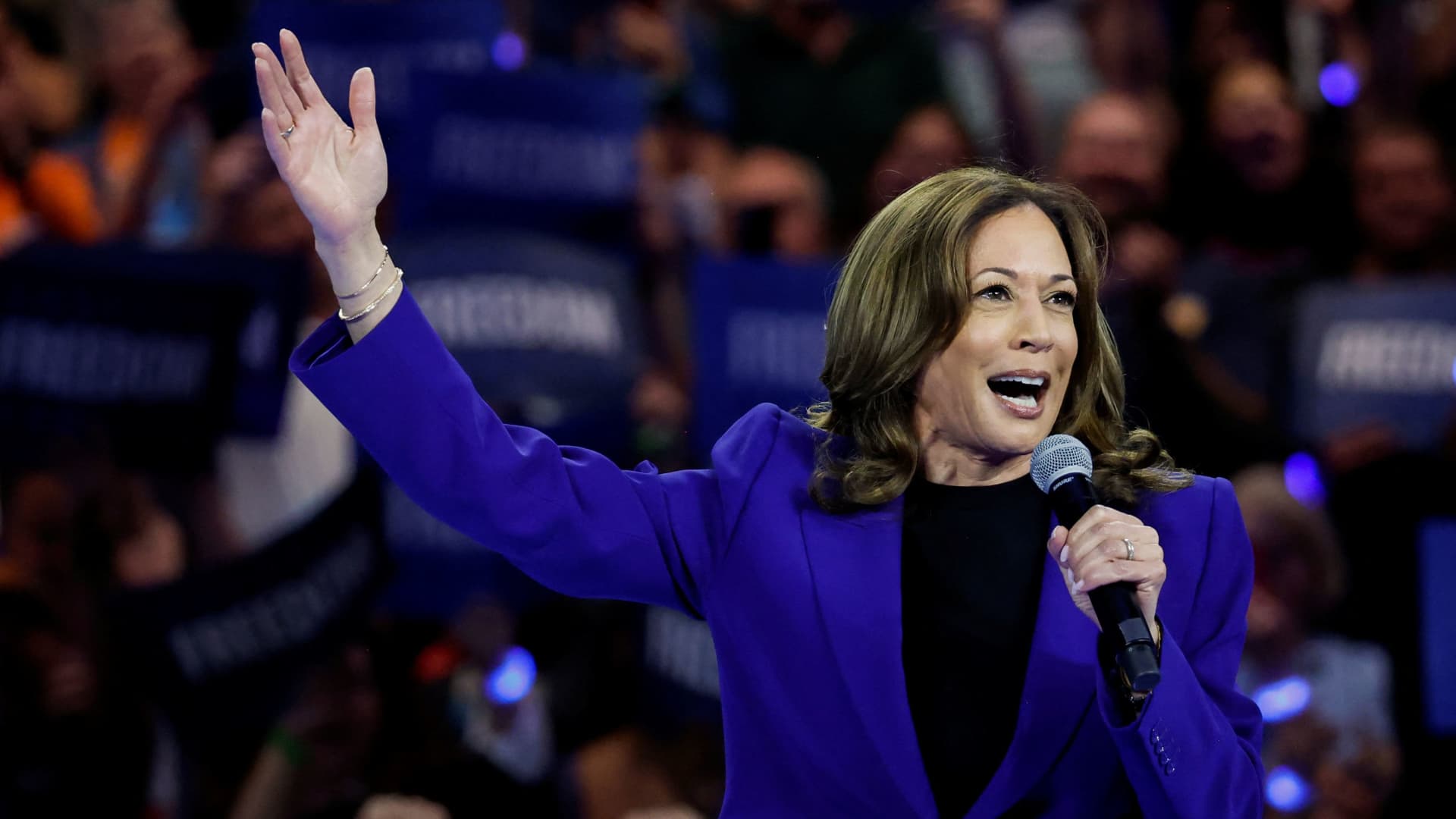
Vice President Kamala Harris' campaign team is actively working to develop a platform position on the crypto industry and reframe President Joe Biden's approach, several key Democrats told CNBC. On Tuesday, Harris' campaign team announced plans to take a pro-crypto innovation position.
Coinbase's chief policy officer Faryar Shirzad praised the move, writing on X that he had “enjoyed participating in numerous discussions with the Harris team.” He described the approach as “constructive” and said “the dialogue was an important first step.”
Read more about technology and crypto from CNBC Pro
Meanwhile, money from digital asset industry executives has flowed into Trump's campaign since he positioned himself as a pro-crypto candidate.
Trump has been making increasingly optimistic statements about cryptocurrencies during the campaign, and announced in late July that he had raised $25 million from crypto investors, although this figure has not been independently confirmed by CNBC.
Crypto industry executives appeared at Trump fundraisers in San Francisco and Nashville, where the Republican candidate told conference attendees that if he returns to the White House, he will ensure that the federal government never divests of its Bitcoin holdings.
“This afternoon, I'm laying out my plan to ensure that the United States becomes the crypto capital of the planet and the Bitcoin superpower of the world,” Trump said. “And we're going to get it done.”

Comments are closed.