
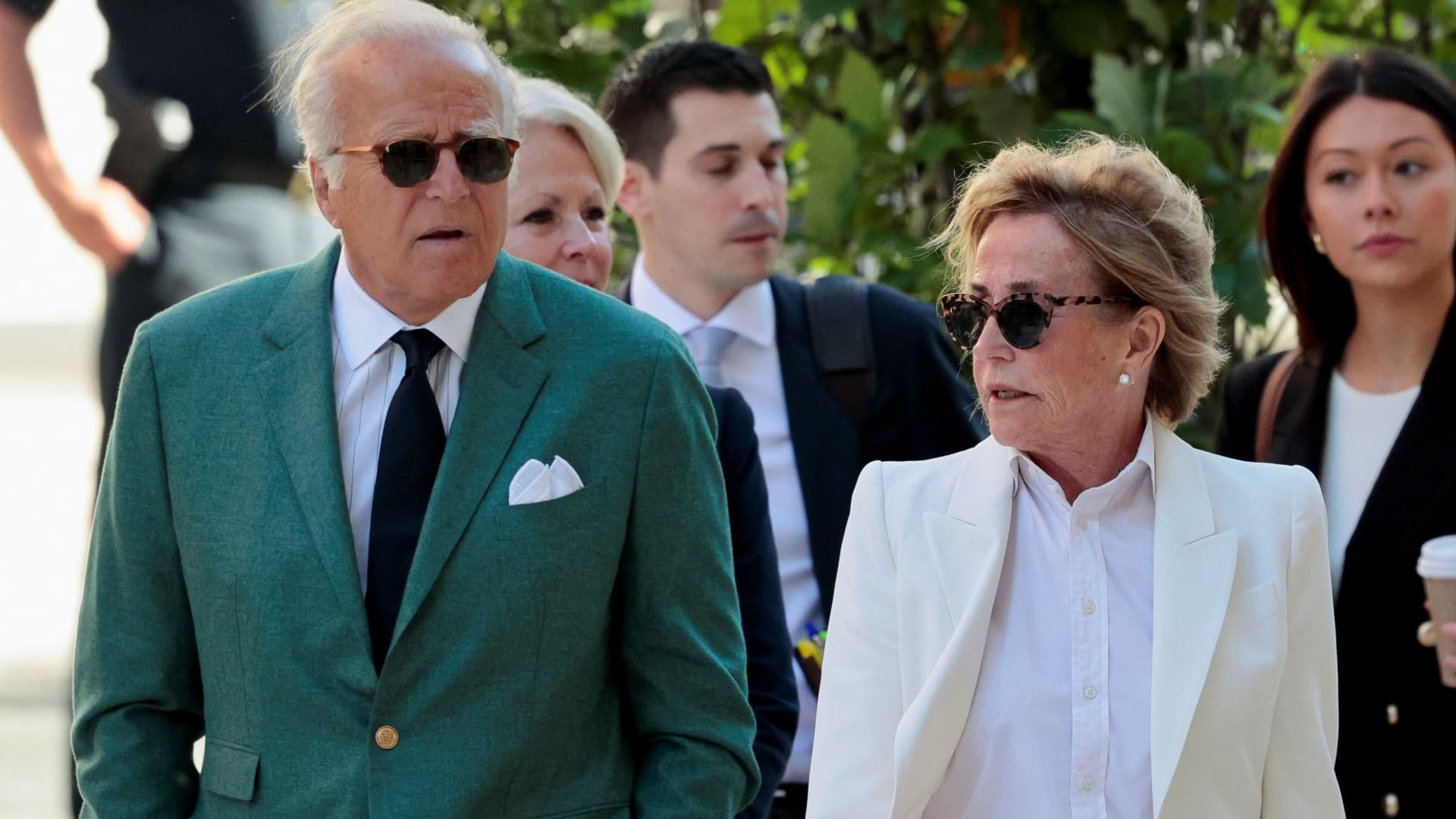

President Joe Biden on Monday issued preemptive pardons to three of his siblings and two of their spouses, raising concerns that they could become targets of “unfounded and politically motivated investigations.”
The White House announced the pardons just minutes before President-elect Donald Trump entered the Capitol Rotunda to be sworn in as the next commander in chief.
Early Monday, Biden preemptively pardoned a number of other figures — including Dr. Anthony Fauci, Gen. Mark Milley and members of Congress investigating the Jan. 6 Capitol insurrection — for similar reasons.
Biden's most recent pardons included his brother, James Biden; James' wife, Sara Jones Biden; his younger sister, Valerie Biden Owens; Owens' husband, John Owens; and his other brother, Francis Biden.
“The issuance of these pardons should not be misconstrued as an admission that they have committed any wrongdoing, nor should their acceptance be misconstrued as an admission of guilt for a crime,” Biden said in a statement.
He also pardoned Gerald Lundergan, former chairman of the Kentucky Democratic Party, and former South Carolina councilman Ernest Cromartie. The outgoing president also commuted the life sentence of Leonard Peltier, who was convicted of killing two FBI agents in 1975.
Biden issued a pardon for his son Hunter Biden in early December, reversing his previous insistence not to do so.
Hunter was convicted in a federal gun crime case last year and pleaded guilty to tax crimes in a separate federal case.
James Biden was interviewed by the House Oversight and Judiciary Committees last year as part of their impeachment inquiry into Joe Biden.
“Jim and Sara Biden did not seek this pardon because they never committed a crime. But for the reasons described by the president, they accepted it,” Paul Fishman, an attorney for James and Sara Biden, said in a statement.
In Monday's press release, Biden said: “My family has been subjected to relentless attacks and threats motivated solely by a desire to hurt me – the worst kind of partisan politics. Unfortunately, I have no reason to believe that these attacks will end.”
“I believe in the rule of law and am optimistic that the strength of our legal institutions will ultimately triumph over politics,” he said.
“But unfounded and politically motivated investigations wreak havoc on the lives, safety and financial security of targets and their families. Even if individuals have done nothing wrong and are ultimately exonerated, the mere fact of being investigated or prosecuted can cause irreparable harm to their reputations and finances.”
“Therefore, I am exercising my authority under the Constitution to pardon James B. Biden, Sara Jones Biden, Valerie Biden Owens, John T. Owens and Francis W. Biden,” Biden said.
After Biden announced the Jan. 6 pardons of Fauci, Milley and members of the committee, Trump was heavily critical, calling the move “disgraceful.”
“Many are guilty of SERIOUS CRIMES! DJT,” Trump told NBC News’ Kristen Welker in a text message. Trump's White House press office did not immediately respond to CNBC's request for comment on Biden's subsequent pardons of his family members.
While Biden's blanket preemptive clemency goes against historical norms, it is common for presidents to issue last-minute pardons. And there is precedent for a president to pardon a family member and someone related to a family member.
On his last day in office, President Bill Clinton pardoned his half-brother Roger Clinton, who had been convicted of drug charges.
Trump pardoned Charles Kushner, the father of his son-in-law Jared Kushner, at the end of his first term.
Charles Kushner pleaded guilty in 2004 to filing false tax returns, retaliating against a witness and making false statements to the Federal Election Commission.
Comments are closed.