
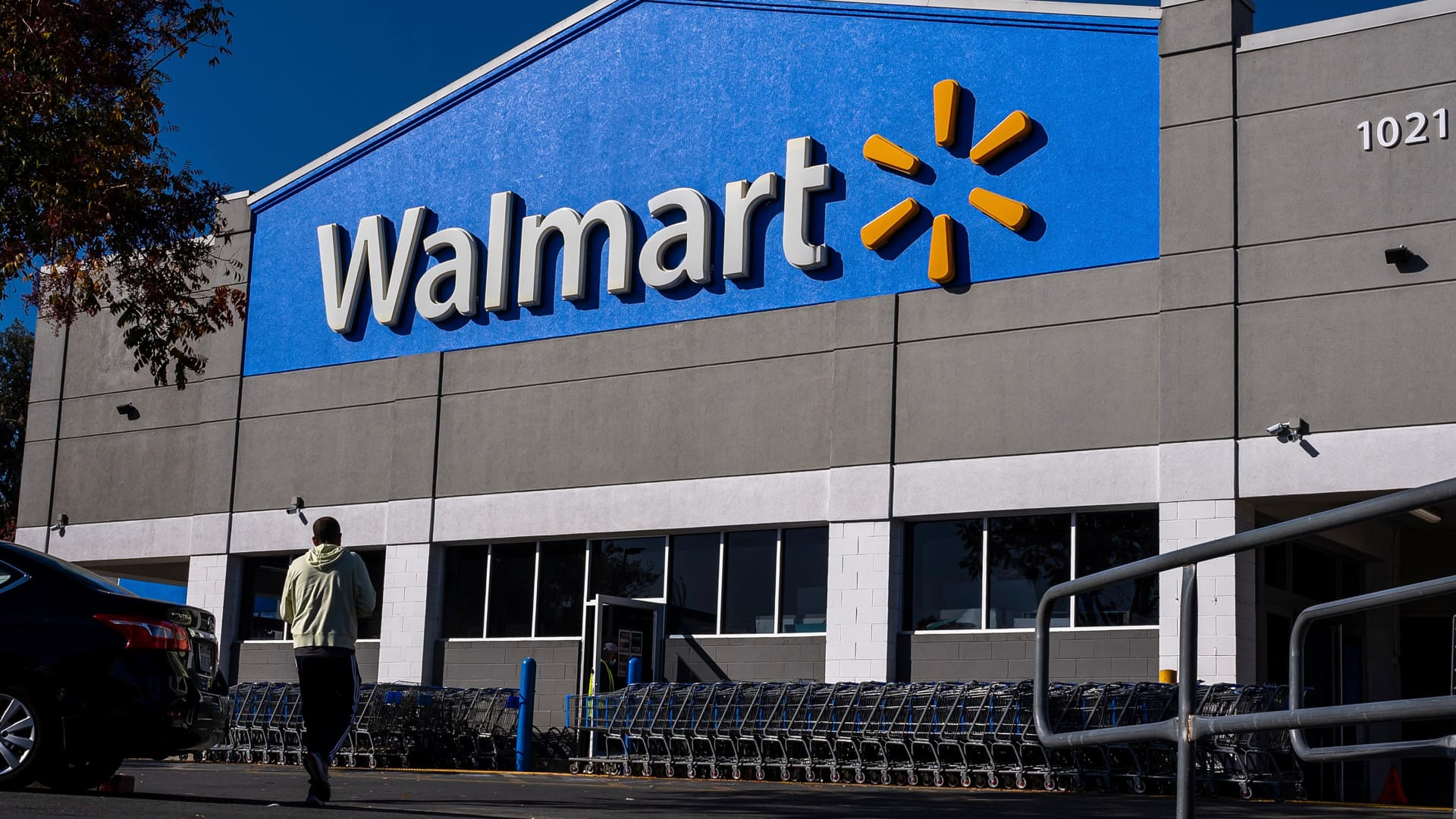

A Walmart store in Martinez, California, U.S., on Monday, November 18, 2024. Walmart Inc. is scheduled to release its earnings results on November 19.
David Paul Morris | Bloomberg | Getty Images
Walmart's CFO John David Rainey said the retailer may have to raise prices on some items if tariffs proposed by President-elect Donald Trump take effect.
“We never want to raise prices,” he said in an interview with CNBC on Tuesday. “Our model is low prices every day. But there will likely be cases where prices rise for consumers.”
Rainey added that it's too early to say which products might cost more because of the tariffs.
Walmart's CFO commented on the possible policy change The largest U.S. retailer beat Wall Street's profit and sales expectations and raised its full-year forecast. Lowe's also addressed the risk posed by the tariff proposal when the home improvement company reported earnings on Tuesday.
The comments from Walmart and Lowe's are the latest warnings from U.S. retail leaders about potential setbacks from tariffs. During Trump's presidential campaign, he said he would impose a 10 to 20 percent tariff on all imports, including duties of up to 60 to 100 percent on goods from China.
On an earnings call, Lowe's CFO Brandon Sink said about 40% of the company's cost of goods sold comes from that from outside the United States, including direct imports and national brand goods. He said the tariffs would “certainly increase product costs,” but added: “The timing and details are uncertain at this time.”
In an interview with CNBC, CEO Marvin Ellison said like other consumer-focused brands and retailers, Lowe's is concerned about the risk of higher costs. He said the company is already in discussions with suppliers about the “what ifs” of tariffs and is waiting to see what Trump's policy change will ultimately look like.
“We are not waiting to act,” he said. “We have plans. We have scenarios and we are trying to understand the implications.”
The two companies aren't the only major retail stakeholders to raise concerns.
In a statement earlier this month, Matthew Shay, CEO of the National Retail Federation, described blanket tariffs as “a tax on American families.” He said it would “drive inflation and price rises and lead to job losses.”
The prospect of higher prices comes as inflation in the U.S. has eased after years of straining consumers' wallets.
Other retailers and brands have also spoken out about the potential downside of the tariffs. Tarang Amin, CEO of Elf Beauty, told CNBC in an interview earlier this month that the company could be forced to raise prices if the higher tariffs take effect. Shoe manufacturer Steve Madden said it will Reduce imports of goods from China by up to 45% next year to avoid the financial impact.
Walmart sells most of the goods are not threatened by tariffs. Rainey said about two-thirds of the items Walmart sells are made, grown or assembled in the United States
Like other companies, Walmart has tried to import from different parts of the world rather than relying heavily on China or a single country, he said. Rainey added that levies imposed during Trump's first term have already caused the company to adapt.
“We’ve been living in a bargaining environment for seven years, so we’re pretty familiar with it,” he said. “However, tariffs are inflationary for customers, so we want to work with suppliers and our own private label range to try to reduce prices.”
— CNBC's Gabrielle Fonrouge contributed to this report.
Comments are closed.