

Enthusiasm for club holding Eli Lilly will have to be tempered – at least for now – as Wall Street grapples with the possibility of a sweeping health care policy shakeup in Washington. News that Republican President-elect Donald Trump on Thursday named prominent vaccine skeptic and obesity drug critic Robert F. Kennedy Jr. to head the Department of Health and Human Services. In short, HHS is the sprawling agency that oversees the Food and Drug Administration, the Centers for Disease Control and Prevention, and the Centers for Medicare & Medicaid Services, among others. The Cabinet-level HHS secretary position requires confirmation by the Senate, where Republicans will have a 53-seat majority while the Democratic caucus will have 47 seats. Some members of the GOP, such as Kentucky Senator Rand Paul, congratulated Kennedy on his nomination. However, it is currently unclear whether Kennedy can reach the 50-vote threshold for confirmation. Shares of obesity drug maker Eli Lilly fell more than 4% on Friday, extending their decline of about 3% in Thursday's session. Media reports of Kennedy's nomination emerged late Thursday afternoon, and Trump confirmed the decision in a social media post after the closing bell. Eli Lilly's main competitor in the obesity market, Denmark's Novo Nordisk, also saw shares fall more than 4% on Friday. Shares of Covid-19 vaccine makers including Moderna and Pfizer sold off late Thursday and again in Friday's session. A popular exchange-traded fund tracking biotech stocks is set for its worst week since March 2023. Meanwhile, analysts at Deutsche Bank downgraded British vaccine maker GSK over Kennedy's selection. Big picture During his campaign, Trump had promised to let Kennedy “go wild” on health issues if given the chance to return to the White House, but his choice to head HHS was widely viewed as unlikely on Wall Street. It now shrouds the pharmaceutical industry in uncertainty until there is more clarity about its support in the Senate. The 70-year-old Kennedy – son of the late U.S. Senator and presidential candidate Robert F. Kennedy and nephew of the late President John F. Kennedy – began his career as an environmental lawyer. In recent decades, he has gained traction for his controversial views on health issues, particularly vaccines. Kennedy has made unfounded claims that childhood vaccinations are linked to autism, despite numerous studies refuting these claims. “Vaccines do not cause autism,” the CDC website states. Kennedy has more recently focused on what he calls the chronic disease crisis in the United States, particularly diabetes and childhood obesity. It was a focus of his unsuccessful 2024 presidential campaign, first in the Democratic primary and then as an independent candidate. Kennedy endorsed Trump in August. LLY YTD Mountain Eli Lilly's year-to-date stock performance. Kennedy has criticized the pharmaceutical industry on a number of issues. In an editorial in the Wall Street Journal in September, Kennedy wrote that the U.S. should consider preventing companies from advertising directly to the public and argued that lawmakers in Washington should “cap drug prices so that companies do not give Americans essential drugs.” Kennedy specifically mentioned Novo Nordisk's diabetes drug Ozempic when he argued for drug price caps. Ozempic is the flagship of the fast-growing GLP-1 class, in which Novo Nordisk and Eli Lilly are currently the two dominant players. Some on Wall Street expect the GLP-1 drug market to be worth $100 billion by 2030 mimic a gut hormone to regulate blood sugar and suppress appetite, leading to weight loss Eli Lilly's GLP-1 called tirzepatide, which is known as Mounjaro for diabetes and Zepbound's anti-obesity sale is central to our investment thesis in the company. Jim Cramer has said it could become the best-selling drug of all time, largely thanks to its weight loss launch. Kennedy believes that the high obesity rate in the United States can be combated through changes in diets and food systems. Weight-loss drugs, Kennedy argued on social media, do not get to the “root” of the obesity problem but merely “pleasing the wallets of distant Big Pharma executives.” Eli Lilly CEO David Ricks and other GLP-1 proponents argue that obesity is a disease and should be treated as such by doctors and health insurers alike. In this way, they argue, GLP-1 should be considered a valuable tool alongside diet and exercise in treating obesity. Lilly and Novo Nordisk have also tried to show that GLP-1 improves health outcomes for patients far beyond simply shedding pounds. Earlier this year, the FDA announced that Novo Nordisk's obesity drug Wegovy may also be prescribed to reduce the risk of serious heart problems such as heart attacks and strokes in obese patients with cardiovascular disease. Eli Lilly has demonstrated similar heart health benefits to tirzepatide. It has also shown promise in the treatment of sleep apnea, among other things. The bottom line is that Eli Lilly has been our favorite pharma stock for years thanks to its outstanding pipeline, led by GLP-1. And the price development since our entry in October 2021 – which has more than tripled despite the recent declines – speaks for itself. The S&P 500 is up just over 30% over the same period. But at this point, Kennedy's nomination requires us to be more cautious about Eli Lilly in the short term. The stock could remain weak as the market processes the implications and likelihood of Kennedy leading HHS. From a pharmaceutical investor's perspective, it's hard to imagine a more worrisome choice for HHS secretary than Kennedy, Jim said. “We’re not touching Eli Lilly yet. There’s no need for that,” Jim said during Friday’s morning briefing. He noted that our early September profit taking of nearly $961 per share allows us to be patient and cautious as Kennedy's nomination process unfolds. Eli Lilly's recent quarterly results were a mess in some areas, but underlying growth in prescriptions for its key GLP-1 drugs was encouraging. (Jim Cramer's Charitable Trust is long-LLY. See a full list of stocks here.) As a subscriber to CNBC Investing Club with Jim Cramer, you will receive a trade alert before Jim makes a trade. Jim waits 45 minutes after sending a trade alert before buying or selling a stock in his charitable foundation's portfolio. If Jim discussed a stock on CNBC television, he waits 72 hours after the trade alert is issued before executing the trade. THE INVESTING CLUB INFORMATION SET FORTH ABOVE IS SUBJECT TO OUR TERMS AND CONDITIONS AND PRIVACY POLICY, ALONG WITH OUR DISCLAIMER. THERE ARE NO fiduciary duty or duty IN RECEIVING YOUR INFORMATION PROVIDED IN CONNECTION WITH THE INVESTMENT CLUB. NO SPECIFIC RESULTS OR PROFITS ARE GUARANTEED.
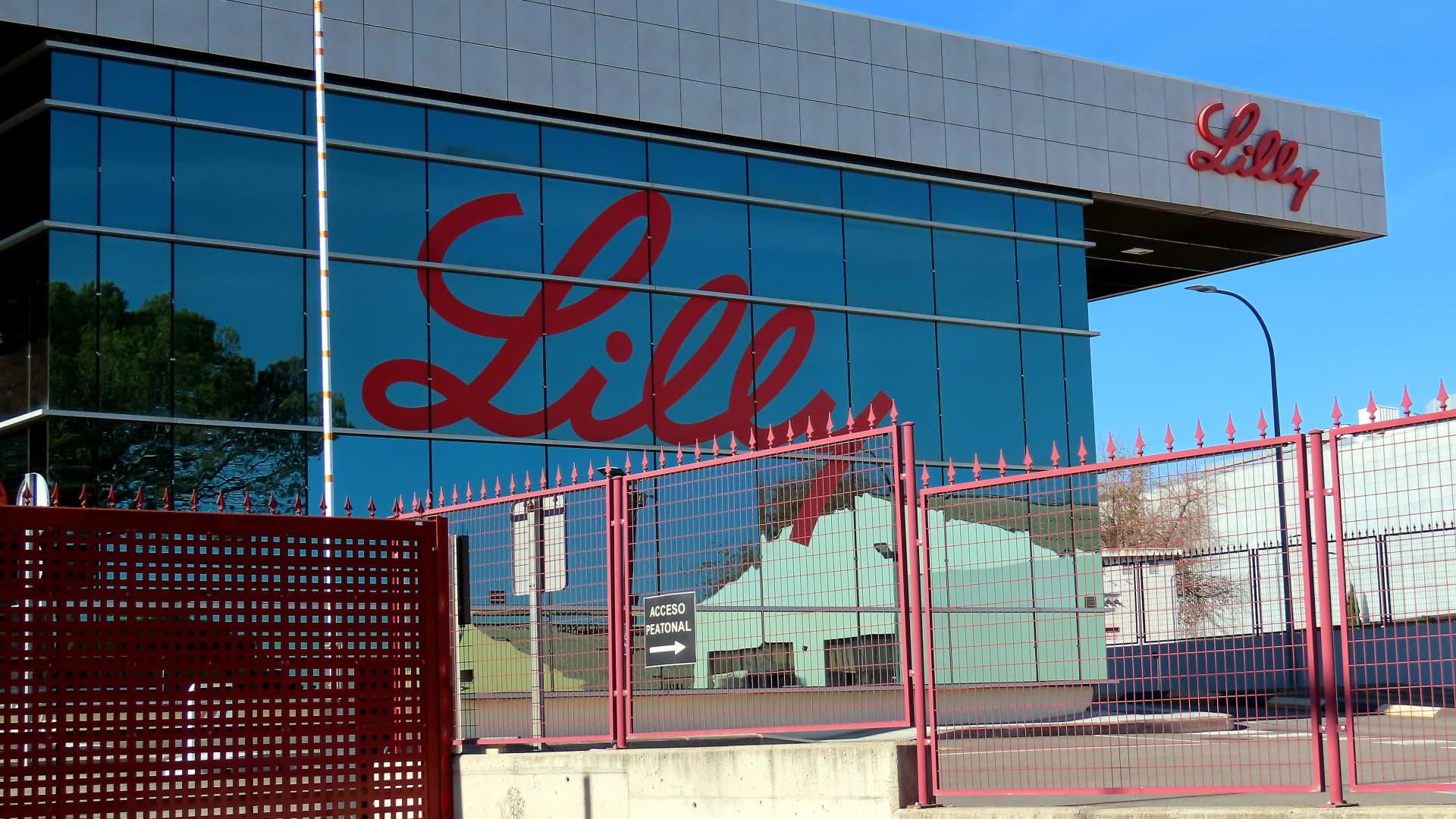
Eli Lilly and Company, pharmaceutical company headquarters in Alcobendas, Madrid, Spain.
Cristina Arias | Cover | Getty Images
Enthusiasm for club operations Eli Lilly needs to be tempered — at least for now — as Wall Street grapples with the possibility of a major shakeup of health care policy in Washington.
Comments are closed.