
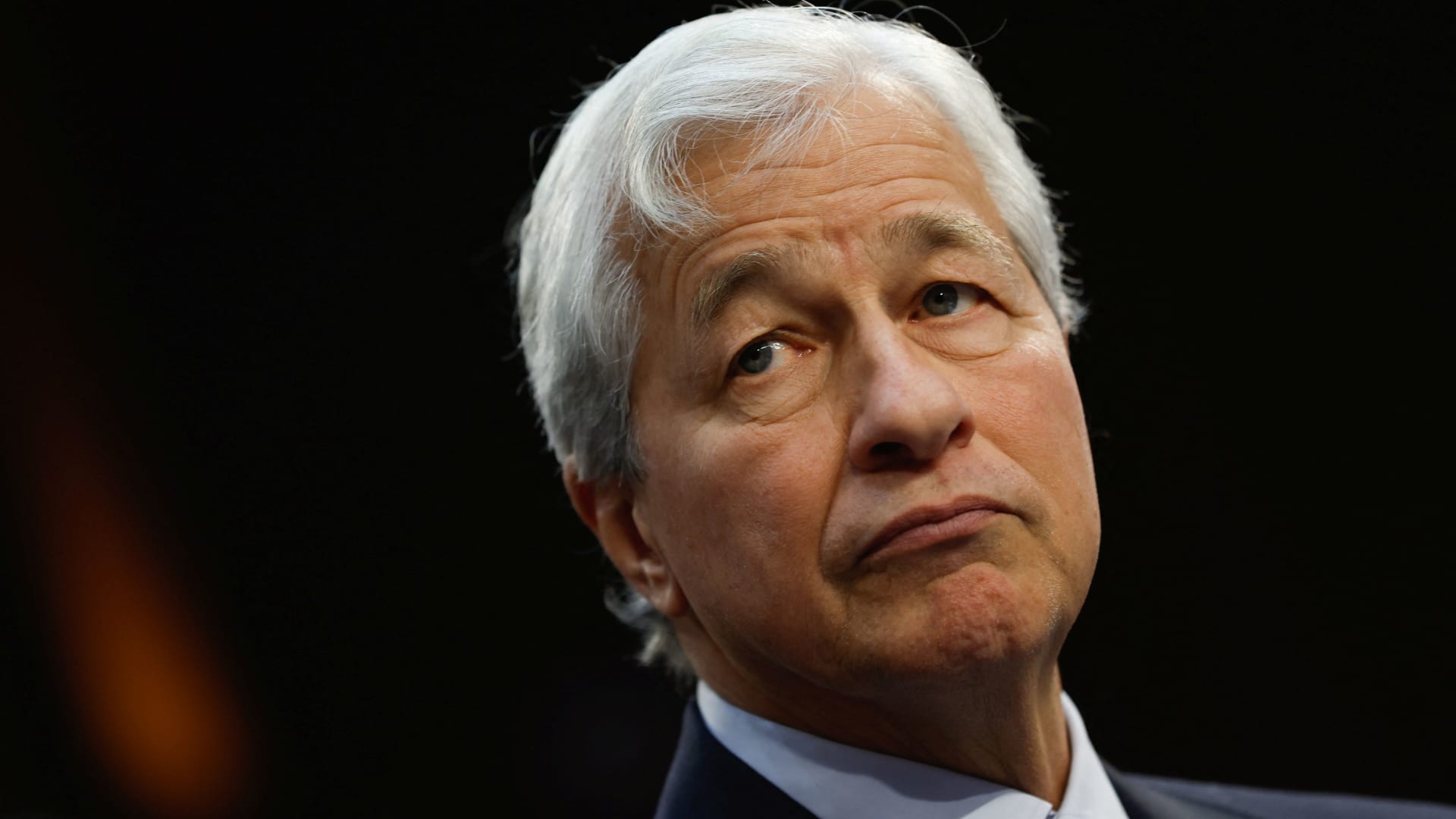

JPMorgan Chase CEO and Chairman Jamie Dimon speaks during the U.S. Senate Committee on Banking, Housing and Urban Affairs' hearing on oversight of Wall Street firms on Capitol Hill in Washington, U.S., December 6, 2023.
Evelyn Hockstein | Reuters
JPMorgan Chase CEO Jamie Dimon sees increasing risks worldwide given the worsening conflicts in the Middle East and the ongoing Russian invasion of Ukraine.
“We have been closely monitoring the geopolitical situation for some time and recent events show that conditions are treacherous and deteriorating,” Dimon said in the bank's third-quarter earnings release on Friday.
“There is significant human suffering and the outcome of these situations could have far-reaching effects on both short-term economic outcomes and, more importantly, the course of history,” he said.
The international order that has existed since the end of World War II is crumbling amid conflicts in the Middle East and Ukraine, rising tensions between the United States and China and the threat of “nuclear blackmail” from Iran, North Korea and Russia, Dimon said during a meeting last month Fireside chat at Georgetown University.
“It's getting worse, folks, and it's going to take really strong American and Western leaders to do something about it,” Dimon said at Georgetown. “That’s my biggest worry, and it dwarfs any worries I’ve had since I’ve been working.”
The ongoing conflict between Israel and Hamas recently reached the one-year mark since Hamas' attack on October 7, 2023, sparking war and showing little sign of slowing down. Tens of thousands of people were killed as the conflict escalated into fighting on multiple fronts, including with Hezbollah and Iran.
Israeli airstrikes killed at least 22 people and injured more than 100 in Beirut on Thursday. Iran fired more than 180 missiles against Israel on October 1, and concerns are growing that an Israeli retaliatory strike could target Iranian oil facilities.
Meanwhile, the Russian government last week approved a budget proposal that increases defense spending by 25% over 2024 levels, a sign that Russia is determined to continue its invasion of Ukraine, analysts say.
Dimon also said Friday that he remains concerned about the future of the economy, despite signs that the Federal Reserve has engineered a soft landing.
“While inflation is slowing and the U.S. economy remains resilient, several critical issues remain, including large budget deficits, infrastructure needs, trade restructuring and global remilitarization,” Dimon said. “While we hope for the best, these events and the prevailing uncertainty demonstrate why we must be prepared for any environment.”
Comments are closed.