
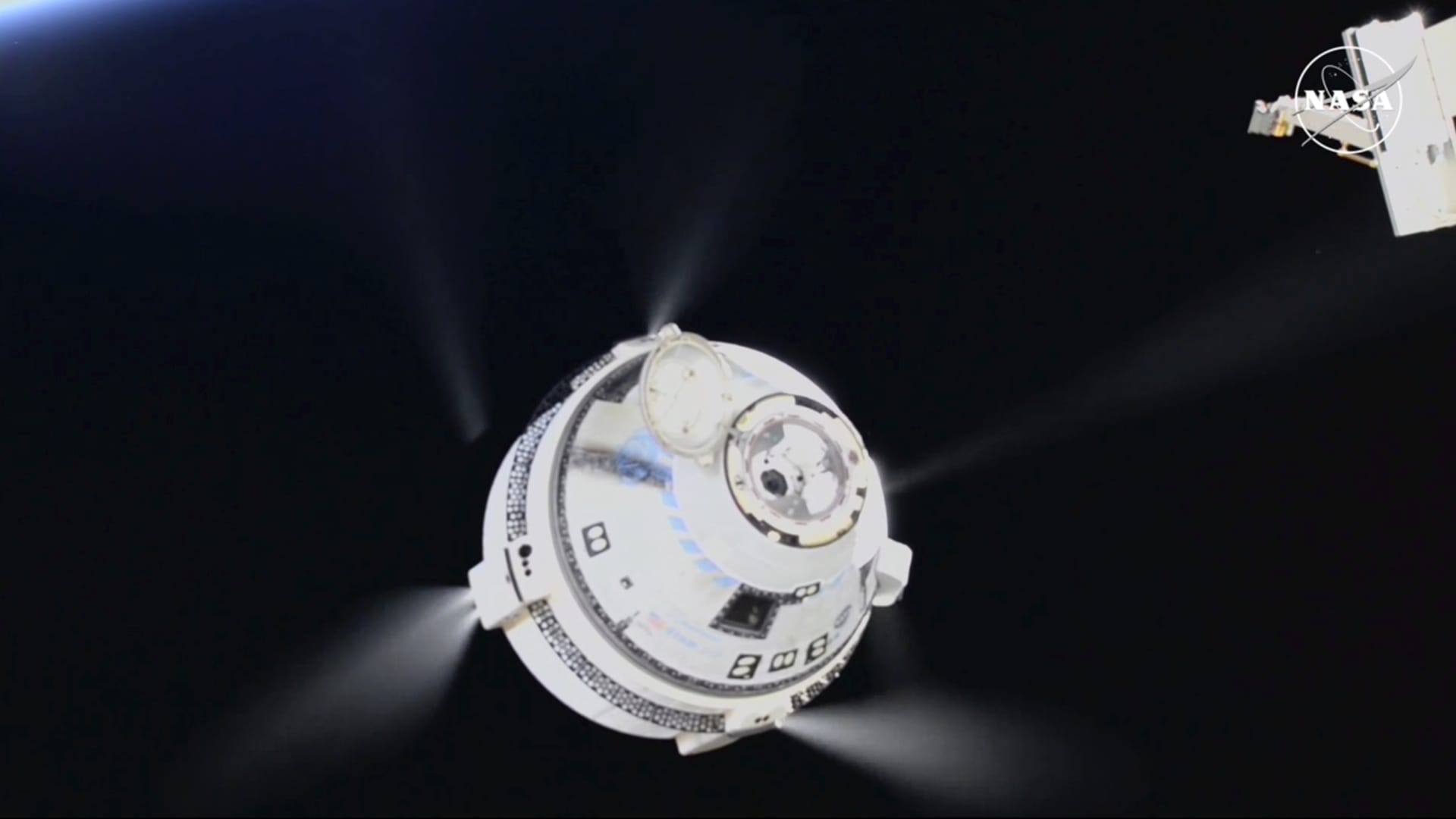

In this image from video provided by NASA, the unmanned Boeing Starliner capsule undocks as it lifts off from the International Space Station on Friday, Sept. 6, 2024.
NASA | About AP
BoeingThe ISS Starliner departed the International Space Station on Friday, months later than originally planned – and without the two astronauts it had carried into orbit in early June.
Instead, NASA test pilots Butch Wilmore and Suni Williams will remain on the ISS for the rest of the year and return to Earth in February aboard SpaceX's Dragon spacecraft.
It left the space station at 6:04 p.m. ET on Friday and took about six hours to return to Earth. Starliner touched down successfully at a landing zone at White Sands Space Harbor in New Mexico at 12:01 a.m. ET on Saturday.
The undocking process was slightly different than it would have been with a crew to protect the ISS and because there were no astronauts on board to take manual control if necessary, NASA officials said Wednesday.
“We're behind you, and you can do this,” Williams told mission controllers at NASA's Johnson Space Center in Houston on Friday before undocking. “Bring them back to Earth. Good luck.”
Read more CNBC space news
The return of Boeing's Starliner capsule “Calypso” marks the end of a test flight that ultimately lasted significantly longer than NASA had originally predicted – and which did not go as planned. NASA had postponed the return of the space probe several times in order to collect more data on the problematic propulsion system.
Starliner, originally scheduled to stay in space for about nine days, spent about three months at the ISS while Boeing investigated a problem with the capsule's engines. Boeing officials insisted in press conferences that Starliner was safe enough to fly the astronauts home in an emergency, although they postponed the return several times.
But in late August, NASA officials finally decided that the agency would send the Starliner back empty, citing a desire to better understand “the root causes” of the spacecraft's problems.
In this image from NASA video, the unmanned Boeing Starliner capsule fires its engines as it lifts off from the International Space Station on Friday, Sept. 6, 2024.
NASA | About AP
The Starliner's crewed flight test was intended to be a final step for Boeing and an important addition for NASA. The agency hoped that two rival companies – Boeing and Elon Musk's SpaceX – could take turns flying missions to the ISS.
Rather, the test flight has set back Boeing's progress in NASA's Commercial Crew Program, and with the company already suffering losses of more than $1.5 billion, it could jeopardize the company's future involvement in it.
Don't miss these insights from CNBC PRO
Comments are closed.